Miniature Christmas Village Lighting FAQ: Color Temperature, Glow Effects, and Setup
The lighting question for this miniature Christmas village has a short answer: each gingerbread house carries its own warm LED, and the listing never states a color temperature in Kelvin. Glow effects are limited to soft illumination that adds warmth, depth, and festive charm. Setup is one numbered box a day from December 1 through December 24, using the included instructions and a firm connection on every building block.
What warm means without a Kelvin number
Color temperature is the usual way to separate a yellow-amber lamp from a blue-white one. Lower numbers on that general scale look warmer, and higher numbers look cooler, yet this page never prints a Kelvin figure. It says every gingerbread house is equipped with its own warm LED, and it stops there. No cool LED sits beside the warm one, and no control is described that would change the color after the house is built. A household comparing warm LED light with cool LED light has only the word warm to rely on.
Three gingerbread houses are included, so the confirmed light belongs in those houses after they are assembled. The Christmas tree, the Christmas train, Santa's sleigh, the scarf-wearing snowman, the gingerbread man, candy canes, the wreath, the squirrel, the mailbox, the bakery, and the bread are scene pieces. Nothing on the page says they glow. A cool lamp aimed across the table would fight the warm LED the set includes, and the listing never describes mixed color temperatures. The store product name is Christmas Village Advent Calendar, listed at $29.95. That price does not add a Kelvin rating. The supplier line reads INSOON.
Glow effects the three houses can produce
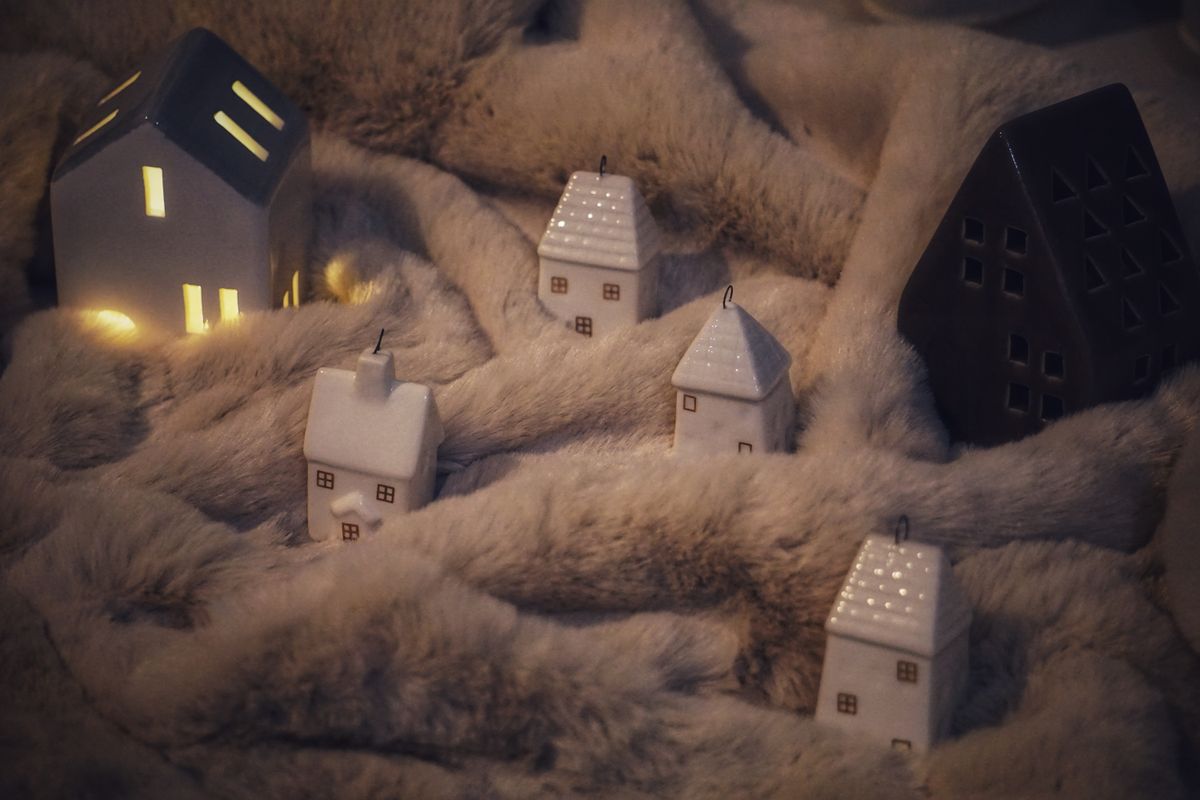
Photo by Demetra Ioannidou on Pexels
The glow the page describes is soft illumination, not a menu of special effects. It adds warmth and depth, and it is meant to give the finished display the look of a storybook winter village used as a holiday centerpiece. Those are the effects a reader can treat as real. Flicker, fade, chase, a color shift, and a dimmer are not named. A photo elsewhere that shows a pulsing facade is not a specification for this set.
Because only the gingerbread houses are tied to a warm LED, the glow sits in up to three small points once those houses are assembled. Nearby figures can catch a little of that light if they stand close, but they are not light sources. Depth comes from several warm points in one cluster, not from a bright wash across the whole room. Theater spots, color gels, and a second string of lamps are gear the listing does not include. The soft look is the entire effect the words support, and it appears as each lighted house joins the snowy village.
Setup order from the first numbered box
Setup begins on December 1 with the numbered box marked 1, then continues with one numbered box each day through December 24. Each compartment holds the pieces for that day's mini building or festive accessory, and the included instructions are the map for those pieces. The page does not describe opening every box on the first night, nor saving the houses for a single lighting session after the countdown ends. Later boxes stay closed so the surprise and the work stay paired.
The practical moment to notice the warm LED is while that gingerbread house is assembled. Press each building block until it is firmly connected. The listing does not name a switch, a battery, a plug, or a wire color, so setup cannot include a power step the paper never states. Keep finished houses on a flat surface where the soft illumination can be seen, and do not cover a roof to change the color. The listing also does not state a piece count, so lighting plans should not depend on a spare-lamp quantity. That is the setup this FAQ can confirm.
Color and glow facts on the listing
| Topic | Listed fact | Not listed | | --- | --- | --- | | Light color | Warm LED on each house | A Kelvin temperature | | Cool option | Not mentioned | A blue-white mode | | How many glow | Three gingerbread houses | A lighted tree or train | | Glow words | Soft light, warmth, depth | Flicker, dimmer, or chase | | Setup pace | One numbered box a day | A separate lighting night |
Lighting checks before the display stays up
Photo by anna carol barros on Pexels
- Treat warm as the only confirmed color, and do not invent a Kelvin number.
- Plan on three lighted gingerbread houses, not a lighted train, tree, or figure.
- Start with the box marked 1 on December 1.
- Open one numbered box each day through December 24.
- Press each building block until it is firmly connected.
- Skip cool LED, dimmer, and color-change claims the listing does not print.
- Keep later boxes closed so the countdown and the glow stay paired.
Color, glow, and setup questions
Does the listing name a color temperature in Kelvin?
No Kelvin figure appears on the page, which only says that every gingerbread house is equipped with its own warm LED. A cool, blue-white color would be a different lighting choice than the warm glow this listing describes, and the page offers no control to select it.
Which glow effects are actually described?
The described effects are soft illumination, warmth, depth, and festive charm, in the manner of a storybook winter village used as a holiday centerpiece. No twinkle mode, dimmer, or color shift is named, so those extras would be guesses rather than listed features.
Do the tree, train, and figures light up?
The listing does not say they do. Light is tied to each gingerbread house, and three houses are included, while the tree, train, sleigh, snowman, gingerbread man, and smaller accessories are named as parts of the scene rather than as lamps.
When should the warm LED be set up?
Setup follows the numbered boxes from December 1 through December 24, with the included instructions for that day's pieces. The warm LED belongs to the house being assembled, so it shows up when that house is built and the blocks are firmly connected, not on a separate lighting evening the page never describes.
Related reading
These notes sit beside other assembly and lighting guides for a countdown village.
- Warm LED methods for a miniature Christmas village
- Installing and checking lights on a building-set village
- Daily assembly and lighting for a lighted countdown
What to do next
Compare the word warm on the listing with the kind of glow the room should have, and drop any plan that needs a Kelvin number or a cool LED. On December 1, open only the box marked 1, follow the included instructions, and seat that day's blocks firmly. Leave color gels and extra lamps off this set, because the page never makes them part of the glow.
Cover photo by 🇻🇳🇻🇳Nguyễn Tiến Thịnh 🇻🇳🇻🇳 on Pexels.