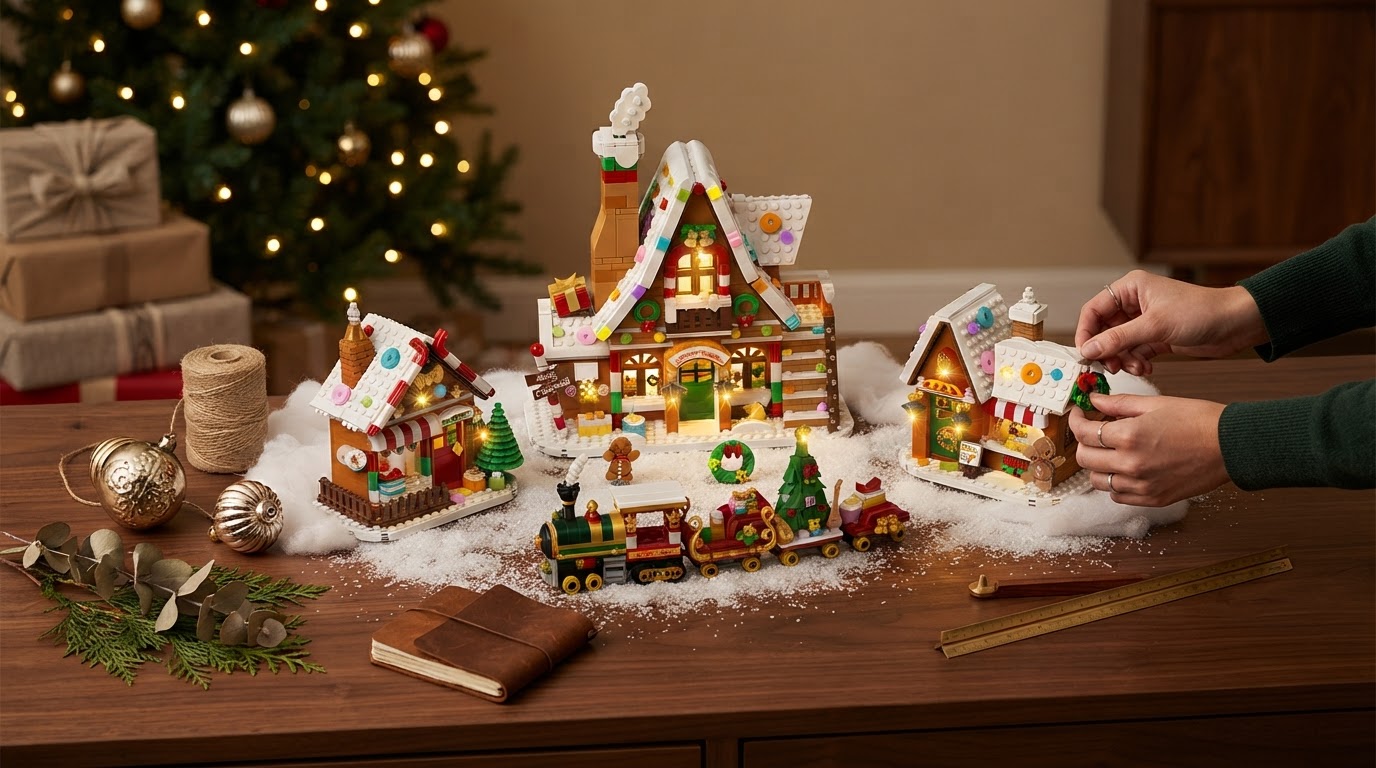
Selecting a Christmas Village Advent Calendar for Longevity
 Maya ChenContributing Editor
October 1, 2026. This assessment evaluates the structural requirements for a holiday centerpiece intended to remain in service for decades. It is written for collectors who prioritize material permanence over seasonal trends.
The conventional wisdom says that any holiday decoration can become an heirloom through sentimental attachment alone. I disagree. Sentiment cannot fix warped plywood or faded lithography. When selecting a Christmas Village Advent Calendar, the market often pushes digital or disposable paper alternatives as modern solutions. For example, the 2025 Christmas Village Advent Calendar | Jacquie Lawson offers a digital experience that, while interactive, lacks the physical presence required for a multi-generational centerpiece. Digital assets are subject to software obsolescence; true heirlooms must exist in three-dimensional space. According to Heirloom Art Co., even paper reproductions of 1946 designs require specific care to survive, highlighting the inherent fragility of non-rigid materials. If a piece cannot withstand the humidity changes of an attic or the mechanical stress of twenty-four small doors being opened annually, it is not an heirloom; it is a temporary fixture. The data on consumer waste suggests that low-cost cardboard calendars are discarded at a rate that contradicts the very concept of a family tradition.
Here's the part nobody talks about: the mechanical failure points of the wooden advent calendar village. To achieve heirloom status, the Christmas Village Advent Calendar must utilize high-density wood composites or solid hardwoods that resist the expansion and contraction cycles of seasonal storage. A wooden advent calendar with village elements requires precision joinery rather than simple adhesives. The Christmas Village Advent Calendar addresses these physical demands by focusing on a structural wooden advent calendar village architecture that serves as a permanent architectural backdrop for the holiday season. Run the math: a twenty-dollar cardboard calendar replaced every year for thirty years costs six hundred dollars and generates significant landfill mass. Conversely, a single heirloom quality advent calendar village investment amortizes to a negligible annual cost while maintaining its aesthetic integrity. The build quality of a wooden advent calendar with village motifs ensures that the tactile experience—the weight of the doors and the stability of the village structures—remains consistent from the first generation to the third. This is not about nostalgia; it is about engineering a product that outlasts its owners.
Evaluating a potential heirloom requires a departure from purely aesthetic decision-making. You must look at the tactile feedback and the repairability of the unit. A heirloom quality advent calendar village should be scrutinized for its finish; painted surfaces should be sealed against UV fading, and hinges should be recessed or reinforced. When assessing the Christmas Village Advent Calendar, use this technical framework:
- Verify the base material density to ensure it won't bow under the weight of stored items.
- Examine the door clearance to prevent sticking during high-humidity winter months.
- Assess the depth of the village compartments for compatibility with various small-scale collectibles.
- Check the stability of the vertical village elements to ensure they aren't prone to shearing at the base.
- Confirm the finish is non-reactive to ensure long-term contact with ornaments doesn't cause staining.
Shop Christmas Village Advent Calendar here