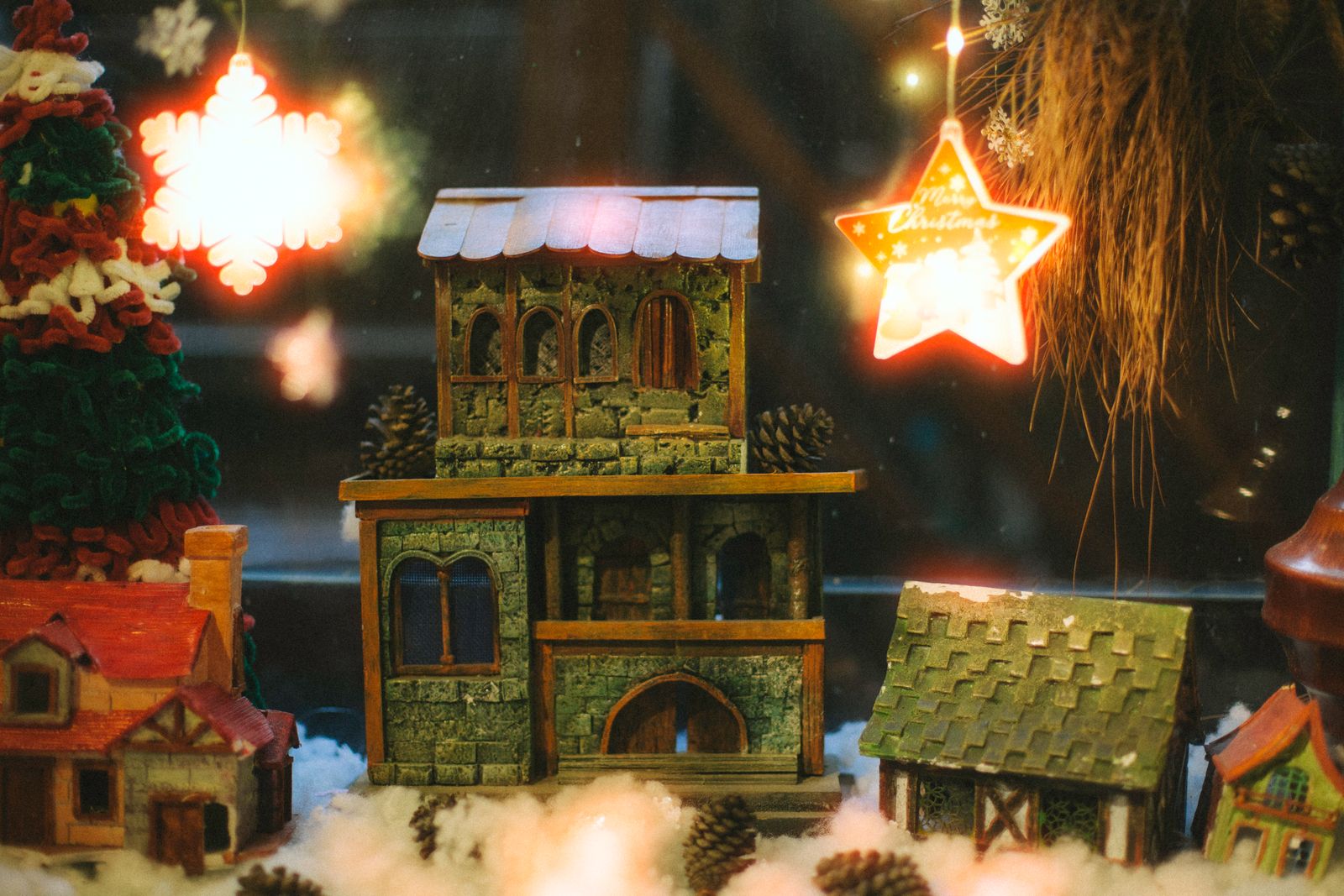
Warm Illumination Techniques for Christmas Village Displays: Creating a Cozy Holiday Glow
Warm illumination techniques for Christmas village displays use the warm LED on each gingerbread house, the only light the listing confirms. Creating a cozy holiday glow is a placement task that groups the houses so the soft light has depth, without cool lamps the page does not include. The countdown still runs from December 1 through December 24, one numbered box at a time.
Let the house LEDs carry the illumination
Illumination on this set has one confirmed source. Every gingerbread house is equipped with its own warm LED, and three houses are included. The page calls the result soft illumination that adds warmth, depth, and festive charm, the glow of a storybook winter village and a holiday centerpiece. It does not add a second system. No strand, no overhead mini spot, and no color-changing bulb is named. Techniques that stay honest start by letting those house LEDs do the work they are described as doing.
The other pieces support the picture without adding light. A Christmas tree, a Christmas train, Santa's sleigh, a gingerbread man, a scarf-wearing snowman, candy canes, a wreath, a squirrel, a mailbox, a bakery, and bread can sit in the glow. The listing also mentions further accessories without listing every one. None of those is described as a lamp. A technique that drills a light into the train or tucks a coin cell into the snowman is not on the page. The cozy quality comes from the warm points that are already equipped, seen against the small shapes around them.
Techniques that add depth on a small surface
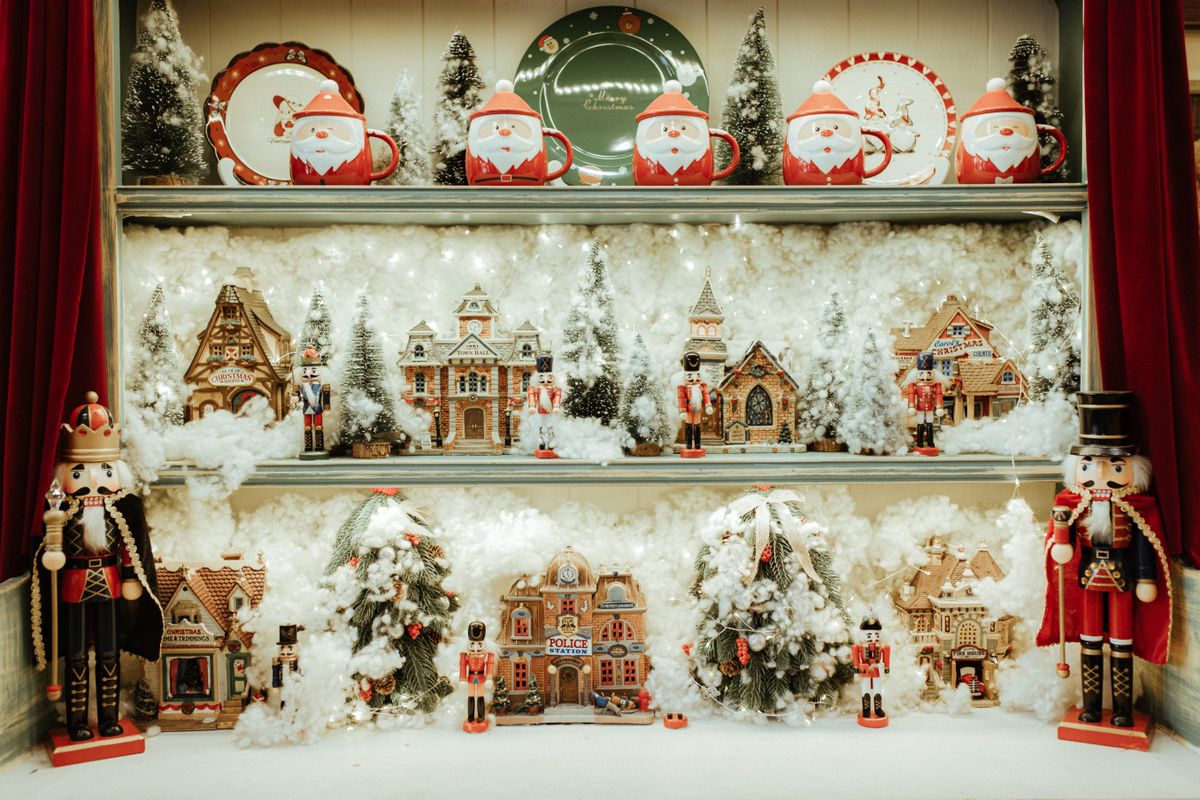
Photo by 🇻🇳🇻🇳Nguyễn Tiến Thịnh 🇻🇳🇻🇳 on Pexels
Depth is a placement technique, not a brighter bulb. Set the three houses close enough that their warm LEDs overlap in the eye as one cluster. A gap that is too wide turns the display into separate souvenirs. A gap that is too tight hides a facade behind a roof. Leave a finger of space between walls, keep the fronts visible, and put the tallest unlighted piece, often the tree, just behind the middle house so it reads as background rather than as a lid.
Lower pieces belong in front and to the sides. The sleigh, the snowman, and the mailbox catch a rim of warm light if they sit slightly below the house windows and out of the direct line of the LED. That is the general idea of a cozy village: a few warm points, nearby shapes, and darkness or ordinary room shadow around the edge. The listing does not require artificial snow, cotton, or moss, so the blocks can stand on a plain tray. A cloth thrown over the roofs would soften nothing in a controlled way. It would only hide the illumination and add a cover the page never clears for heat.
Creating a cozy holiday glow in the room
Creating the cozy effect also means protecting the warm color from cooler light nearby. A blue-white ceiling lamp aimed straight at the tray will wash the warmth out, even though the houses still hold warm LEDs. The listing never states a Kelvin number, so no one can claim an exact match to a room bulb. The practical technique is simpler: dim or redirect the coolest overhead light, and let the house LEDs be the brightest warm notes on that surface. Do not put a color gel on the houses. The page does not describe filters.
The display still has to follow the calendar. Techniques applied on December 1 can use only the first numbered box. New pieces join one compartment a day through December 24, after the included instructions are done and every building block is firmly connected. The store product name is Christmas Village Advent Calendar, listed at $29.95. The supplier line reads INSOON. The price does not buy a dimmer, a piece count, or a room-lighting diagram. Open flames stay off the surface. The cozy holiday glow this page can stand behind is three warm house LEDs, grouped, unblocked, and built on schedule.
Warm illumination choices for a small display
| Technique | How it stays honest | What to avoid | | --- | --- | --- | | Use house LEDs | Warm LED on each house | A strand the set lacks | | Group the houses | One cluster, small gaps | Houses at far ends | | Layer the pieces | Tree behind, figures aside | Covering the facades | | Guard the warmth | Ease cool overhead light | Gels or a Kelvin claim | | Follow the days | One numbered box a day | A finished scene on day 1 |
Checks for a cozy warm glow
Photo by Jean-Baptiste Terrazzoni on Pexels
- Use only the warm LED on each gingerbread house as the confirmed light.
- Group the three houses with a small gap so the glow reads as one.
- Place the tree behind and the smaller figures beside, not across, the fronts.
- Ease cool overhead lamps that wash the warm color out.
- Skip gels, covers, and open flames the listing does not discuss.
- Add pieces only after that day's box is built and the blocks are firm.
- Keep the countdown from December 1 through December 24.
Warm glow questions
What light creates the cozy glow?
The listing credits a warm LED on every gingerbread house, three houses in all, and describes soft illumination, warmth, depth, and festive charm. No other lamp, strand, or dimmer is named, so the cozy look has to come from those houses and from where they sit.
Does a Kelvin number define the warmth?
No Kelvin number is printed, so a technique cannot tune the houses to a stated color temperature. Warm is the only color word the page gives, and a cool room lamp is a separate light that can visually wash that warmth even when the house LEDs stay as they are.
How close should the houses stand?
Close enough to read as one cluster, with a small gap so the walls are not grinding and the facades stay visible. The page prints no inch measurement, and the test is whether the three warm points feel like one village rather than three separate objects.
Can the full glow be created on the first night?
Only if that would require opening later boxes, which the listing does not support. The glow grows as the lighted houses are built between December 1 and December 24, one numbered compartment at a time, using the included instructions.
Related reading
Warm light and centerpiece placement are treated in these companion guides.
- Warm LED techniques for lighting a miniature village
- Centerpiece styling for an illuminated village
- Assembly and display for a light-up gingerbread countdown
What to do next
Group the gingerbread houses as they are finished so the warm LEDs form one soft cluster, and keep figures from blocking the fronts. Ease the coolest overhead lamp if it washes the warmth out, without adding gels or a strand the page does not include. Stay on one numbered box a day from December 1 through December 24.