Choosing a Christmas Village Advent Calendar for Small Gifts
 Sam VasquezBuying Guide Lead
October 8, 2026. This guide examines the practical requirements for selecting a fillable advent calendar houses set. It is written for consumers looking to move away from disposable plastic trays toward a more sustainable, interactive holiday display.
The Problem with Disposable Holiday Countdown Sets
Most mass-market advent calendars are designed for a single use, ending up in a landfill by the new year. When you shift toward a fillable advent calendar houses set, you are usually trying to solve two problems: the lack of personalization in pre-filled sets and the waste generated by cardboard-and-plastic packaging. However, the market for individual house sets is fragmented. You have to decide between thin paper constructions that might not hold the weight of a chocolate truffle and heavy wooden structures that take up significant storage space in the off-season. According to Etsy seller All We Don't Say, high-quality paper sets often include 24 house-shaped boxes designed specifically to hold small gifts or notes, which provides a middle ground for those who want a village aesthetic without the bulk of solid timber.
I have found that the biggest frustration for most buyers is the size of the interior cavity. Many generic sets use uniform sizing that won't accommodate anything larger than a postage stamp. If you are planning to include varied items—like small toy cars, luxury tea bags, or gemstone samples—you need a set that offers volumetric diversity. Furthermore, many cardboard Christmas village advent calendar options are sold as flat-packs. While this is great for shipping, it requires a significant time investment to assemble before December 1st. If you aren't interested in folding two dozen tiny tabs, you should look for pre-assembled options or a DIY Christmas Village Advent Calendar kit that streamlines the construction process with pre-scored lines and adhesive strips.
How the Christmas Village Advent Calendar Balances Durability and Design

Photo by 🇻🇳🇻🇳Nguyễn Tiến Thịnh 🇻🇳🇻🇳 on Pexels
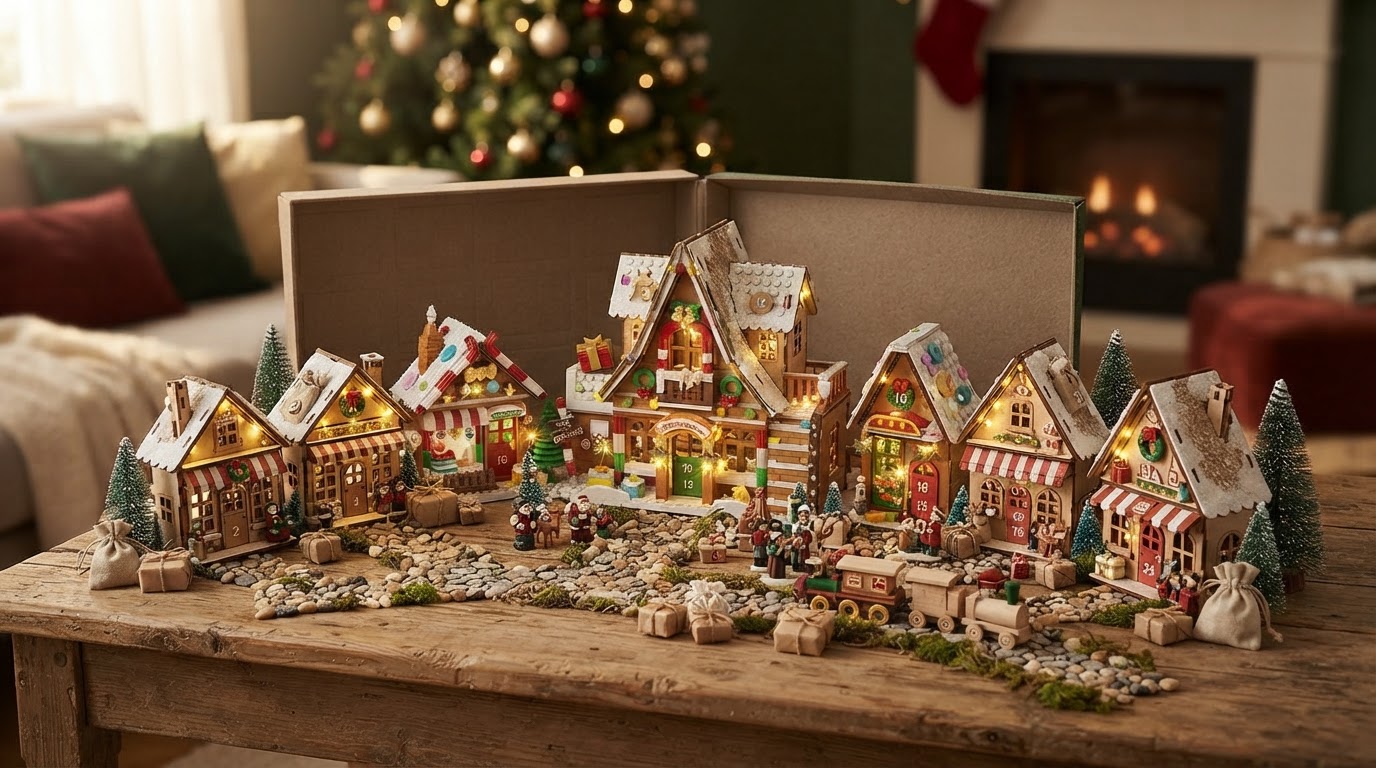
The Christmas Village Advent Calendar is built to bridge the gap between flimsy seasonal paper and permanent heirloom furniture. While wooden versions can be beautiful, they are often prohibitively expensive and difficult to repair if a door hinge breaks. In contrast, this system uses a reinforced material that handles the weight of traditional advent treats without sagging. It provides a cohesive look that mimics a traditional European winter village, allowing you to create a tabletop display that serves as both a countdown and a centerpiece. This is particularly useful for those who want reusable advent calendar houses but don't have the attic space for a large wooden chest.
Here's what I'd actually buy: if you have children who are likely to be rough with the boxes, I would lean toward the Christmas Village Advent Calendar over a standard cardboard Christmas village advent calendar because the structural integrity is significantly higher. The design allows for a "village" layout rather than a flat wall, which means you can hide the houses around a room for a scavenger hunt or cluster them under the tree. Between these two, I'd go with the village layout every time because it adds a layer of physical interaction that a flat box simply cannot match. If you are looking to customize the look further, you might consider a DIY Christmas Village Advent Calendar kit to add your own paint or glitter, but for a professional, out-of-the-box look, the standard village set is the most efficient choice.
A Framework for Selecting Your Village Set
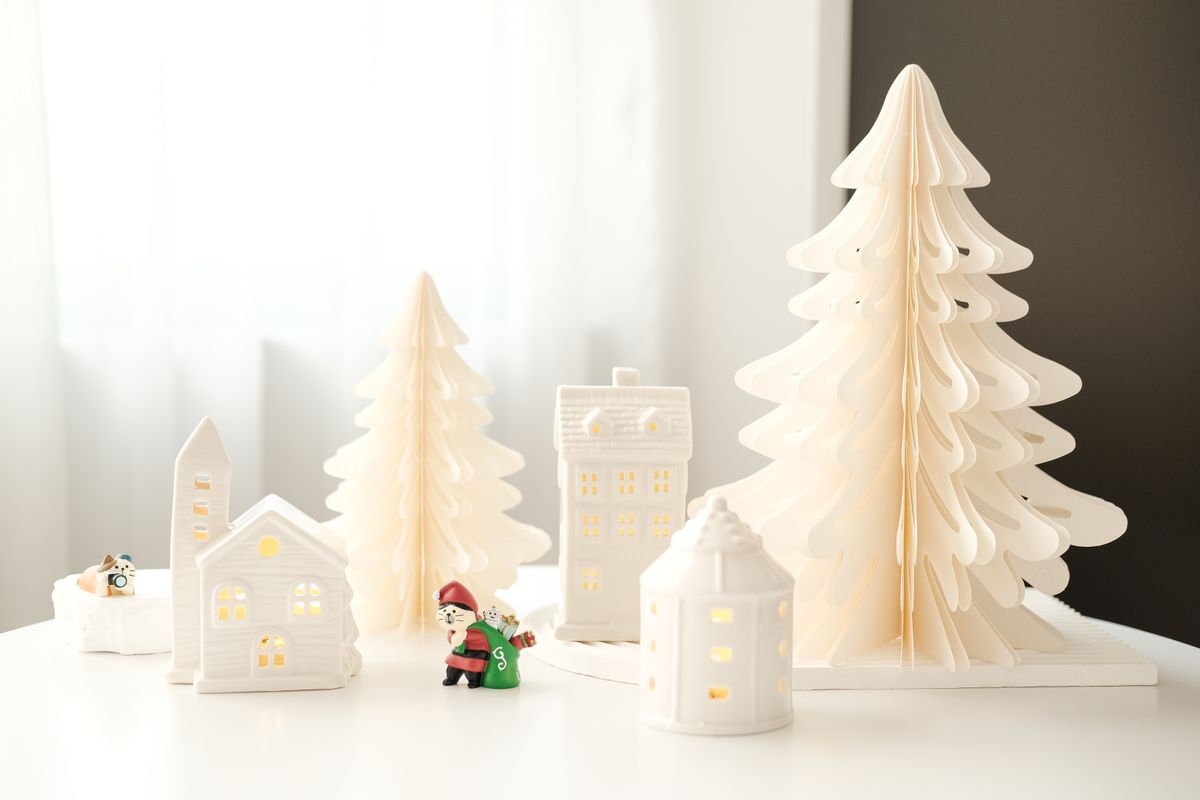
Photo by Ngân Dương on Pexels
When you are ready to purchase, you need to evaluate the set based on your specific holiday traditions. Skip this if you only plan on using paper slips or “activity coupons” for your countdown; in that case, a simple envelope set is more space-efficient. However, if you are filling the houses with physical objects, you need to measure your largest intended item before clicking buy. As demonstrated in a tutorial by Hometalk on YouTube, turning individual boxes into a cohesive village requires a plan for how they will sit together on a mantle or shelf.
Use this checklist to evaluate your options:
- Internal Volume: Ensure the smallest house in the set can fit a standard 1-inch cube.
- Material Weight: Look for a minimum of 250gsm if choosing paper to ensure the base doesn't blow out under the weight of candy.
- Closure Type: Check if the houses require tape or if they have a tuck-in tab for easy access without tearing the material.
- Storage Footprint: Confirm if the houses can be collapsed flat after the season to save space.
- Aesthetic Consistency: Verify that the numbering is legible but doesn't overpower the architectural details of the village.
Shop Christmas Village Advent Calendar here