Lighted Advent Calendar Building Sets vs. Traditional Ceramic Villages: Styling & Buying Guide
Lighted advent calendar building sets grow through one numbered box a day, while traditional ceramic villages are usually purchased as finished scenes. This listing describes three gingerbread houses, each with a warm LED, and it does not describe ceramic material or a completed collector house. A styling and buying guide for the two formats starts with that difference, then asks which household wants a shared December build.
A daily build versus a finished ceramic scene
A traditional ceramic village is a general category: finished houses, often collected over several seasons, usually placed as a complete scene. This listing is not that category. It is a gingerbread house mini building set with lights, counted down by opening one numbered box each day from December 1 through December 24. The village grows. Early in the month the table may hold a tree, a mailbox, or a single figure. By the last day, three gingerbread houses can anchor a snowy scene that also includes a Christmas train, Santa's sleigh, a gingerbread man, a scarf-wearing snowman, candy canes, a wreath, a squirrel, a bakery, bread, and further accessories the page does not name one by one.
The lighting difference follows the same split. Each gingerbread house on this listing is equipped with its own warm LED, and the soft illumination is described as warmth, depth, and festive charm. The page does not say the ceramic-style pieces in a collector village work this way, and it does not say this set is ceramic. Buyers who want glaze, porcelain weight, or a finished roof on day one will not get that promise from these words. Buyers who want a shared build get a clear rule: included instructions, pieces from that compartment, and building blocks pressed until firmly connected.
Styling villages that grow across December

Styling a lighted building set means planning for an incomplete picture. The center can be reserved on a tray before December 1, and each new piece joins only after its box is opened. The three houses should sit together once they exist, so the warm LEDs read as one glow rather than as scattered points. Unlighted pieces, including the tree and the train, belong around that glow and should not cover the facades. A traditional ceramic scene is styled once, because the houses arrive whole. This one is styled twenty-four times, lightly, as the countdown adds a mini building or a festive accessory.
That pace is also the look. A half-built village on the table is not a mistake. It is the tradition the page describes. Families who want a full street on the first weekend would be fighting the numbered boxes. The page frames the set as something to build together and as a gift for kids, family, friends, or a Christmas gift exchange. It states no age grade, so the word kids is not a number.
Buying questions this listing can answer
The buying facts that are actually printed are straightforward. The store product name is Christmas Village Advent Calendar, listed at $29.95. The supplier line reads INSOON. The set is a 24-day gingerbread build with three houses that carry warm LEDs, plus the named train, tree, sleigh, and figures. The listing does not state a piece count, a warranty, a material grade, or an age. Other amounts that sometimes sit beside variant rows are not the price to quote here. At $29.95 the offer is the shared countdown and the scene list, not a collector certificate.
A household choosing between formats can ask three questions the page can bear. Is a daily build welcome from December 1 through December 24? Is warm light from three houses enough, without a claim that the tree or the train glows? Is a block village acceptable in place of ceramic? If the answer to any of those is no, a traditional ceramic village may fit better, and this listing should not be stretched to sound like one. If the answers are yes, the styling plan is the tray, the one-box rule, and the firm connection. Longevity claims beyond that, including heirloom grades, are not printed here.
Lighted building set versus a ceramic village
| Point | This building set | Traditional ceramic village | | --- | --- | --- | | How it arrives | One numbered box a day | Usually finished houses | | Light | Warm LED on each house | Not described on this page | | Material | Building blocks and pieces | Ceramic is not claimed here | | Scene pace | Grows through December 24 | Often styled in one session | | Price fact | Listed at $29.95 | No ceramic price is stated |
Buying checks beside a ceramic village

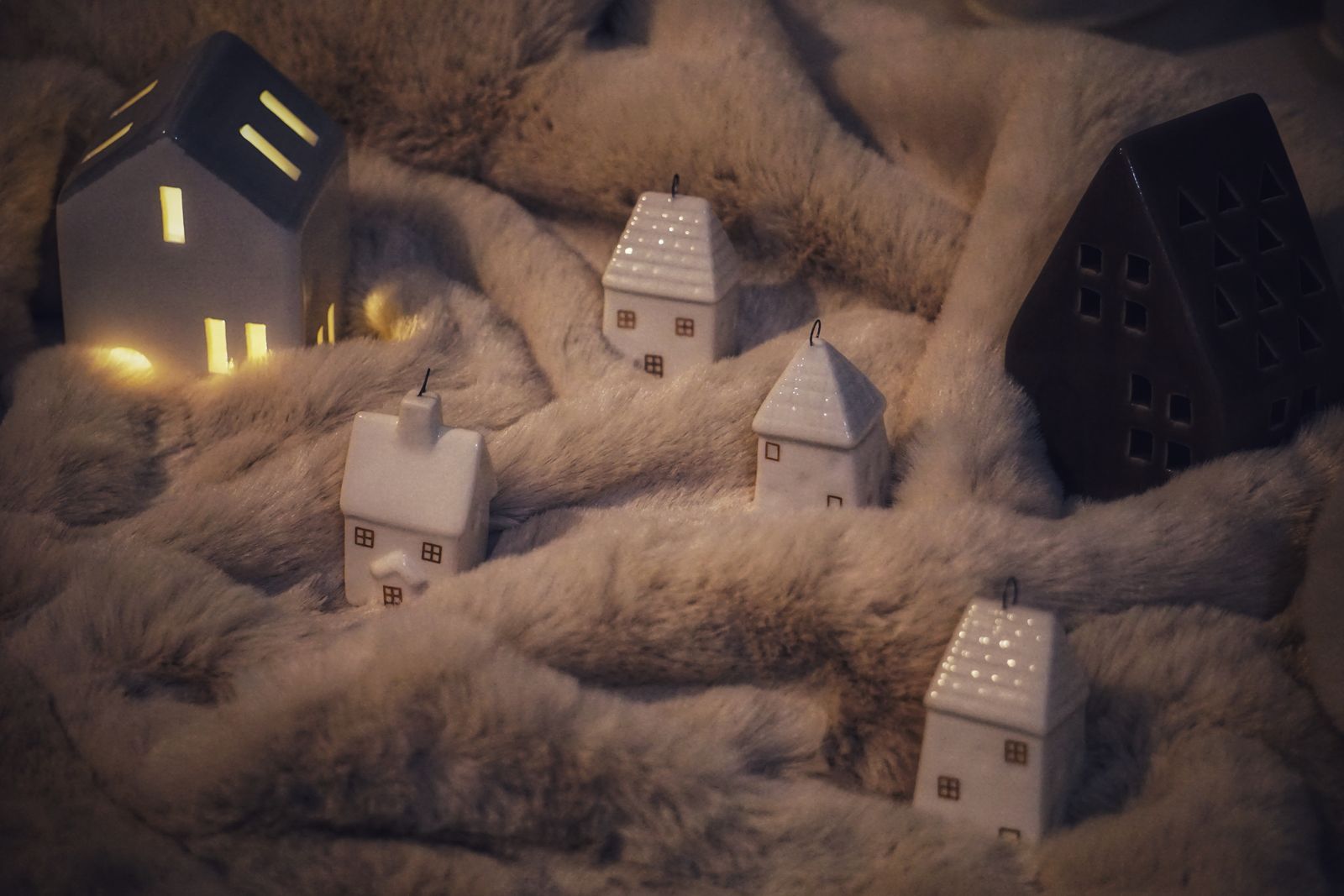
Photo by Natasha Fernandez on Pexels
- Confirm the wish is a 24-day build, not a finished street of houses.
- Expect three warm-LED gingerbread houses, not a lighted train or tree.
- Do not assume ceramic, porcelain, or a glaze the listing never names.
- Quote $29.95 for this listing and ignore other variant amounts.
- Do not invent a piece count, an age grade, or a warranty.
- Plan styling around a tray that fills in one compartment a day.
- Keep the included instructions as the only assembly map.
Styling and buying questions
Is this set a traditional ceramic village?
No. The listing describes a gingerbread house mini building set with warm LEDs and numbered daily boxes, not ceramic or porcelain. A traditional ceramic village is a different kind of display, usually bought as finished houses rather than built from December 1 through December 24.
What lighted pieces does the buyer actually get?
Three gingerbread houses, each equipped with its own warm LED, are the lighted pieces the page names. The tree, train, sleigh, snowman, gingerbread man, and the other accessories are part of the scene, and the listing does not say they glow.
How should the set be styled before every box is open?
Reserve one tray and add only the piece from that day's compartment, keeping the houses grouped once they exist so the warm light reads as one village. An incomplete table in the first week is the countdown working, not a styling failure.
What should the price be compared against?
The listed price for this set is $29.95, and the page does not print a piece count or a warranty to stack beside that figure. A ceramic village would need its own price from its own listing, because this page does not quote one or claim to replace that format.
Related reading
Buying and format comparisons for a village countdown are in these guides.
- A buying guide to Christmas village building countdowns
- Building-block countdowns beside traditional advent formats
- What to weigh when a village calendar should last
What to do next
Write down whether the household wants a daily build or a finished ceramic scene, and do not treat this listing as both. If the build is the goal, reserve a tray, quote $29.95, and start on December 1 with the box marked 1. Style only the pieces that have been opened, and let the three warm-LED houses become the center once those compartments arrive.
Cover photo by Demetra Ioannidou on Pexels.